
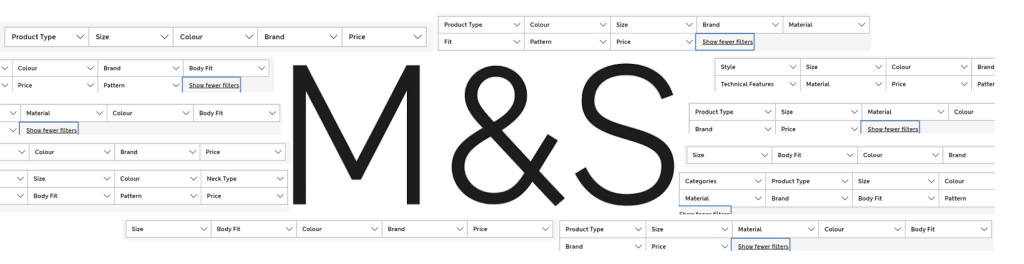
When it comes to online clothes shopping, size is a critical factor influencing add-to-cart decisions.
In Baymard’s large-scale UX testing of Product Lists & Filtering and Apparel sites, allowing users to narrow the product list to only their sizes before they began browsing was observed to directly enable them to find suitable items in their size.
– Apparel E-commerce:Visually group and clearly label size filter options, (Baymard, March 2024)
…if the display of size filter options makes it difficult for users to understand what the sizing options actually are, some will forgo size filtering entirely — leading to more difficulty finding the right product — or even leave the site.
I consulted with Marks and Spencer in 2024 to help them increase online conversion throughout all stages of the online customer journey.
I audited product listing pages (PLP) and found a major issue with how sizing was conveyed. It was not a one-off, affecting numerous categories and worryingly, the business appeared to be unaware it existed.
I investigated thoroughly and presented my findings (cross-checked with internal research, cart abandonment surveys and industry best practice) with actionable solutions until my deployment ran its course.
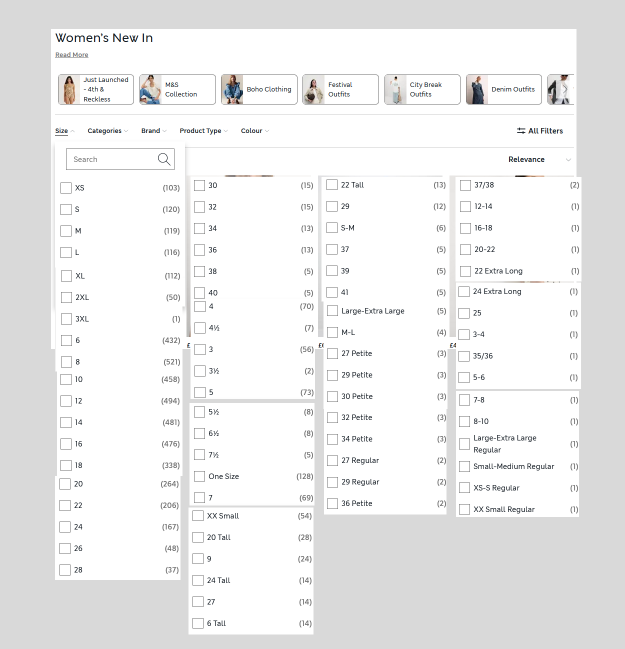
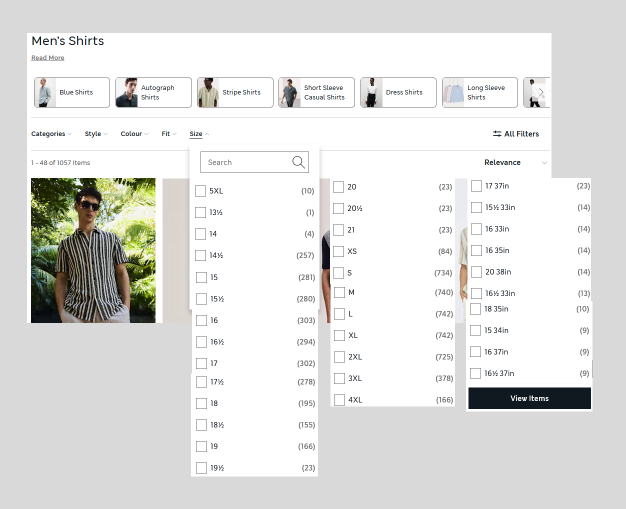
size is one of the most important factors influencing add-to-cart decisions
Sizing is poorly organised across M&S’ entire clothing category. This is a major obstacle to conversion that remains unresolved in 2025.
An extreme example is the Fuller Bust bra selection, which refers to size F-K.

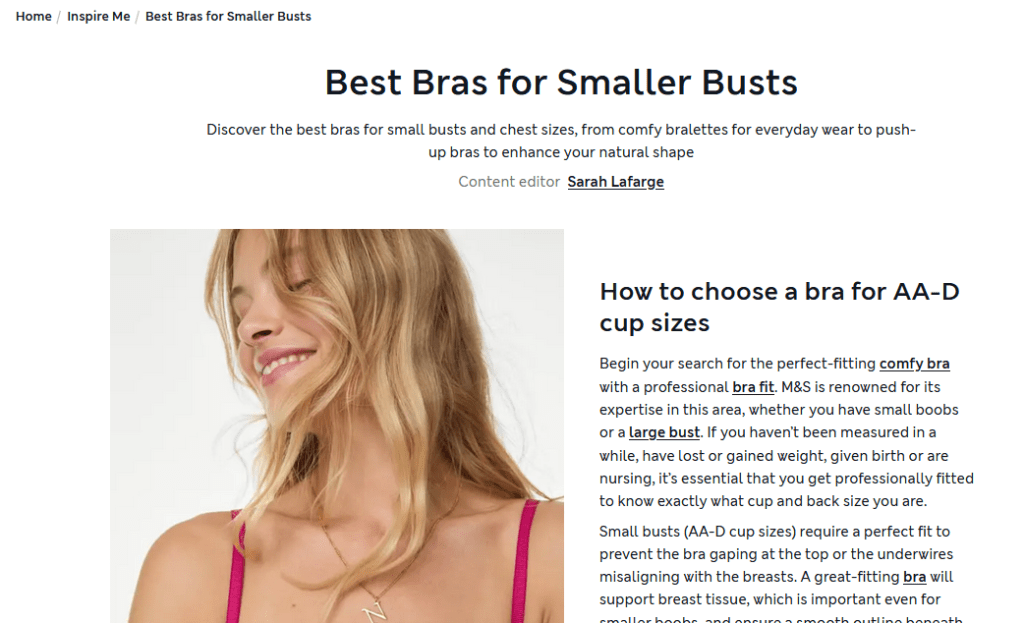
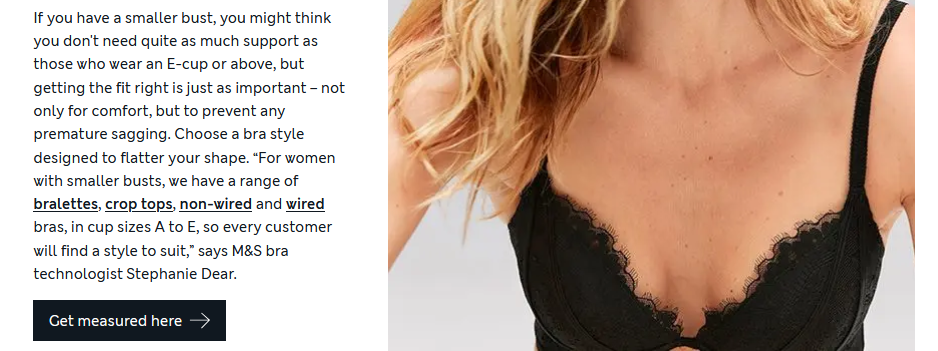
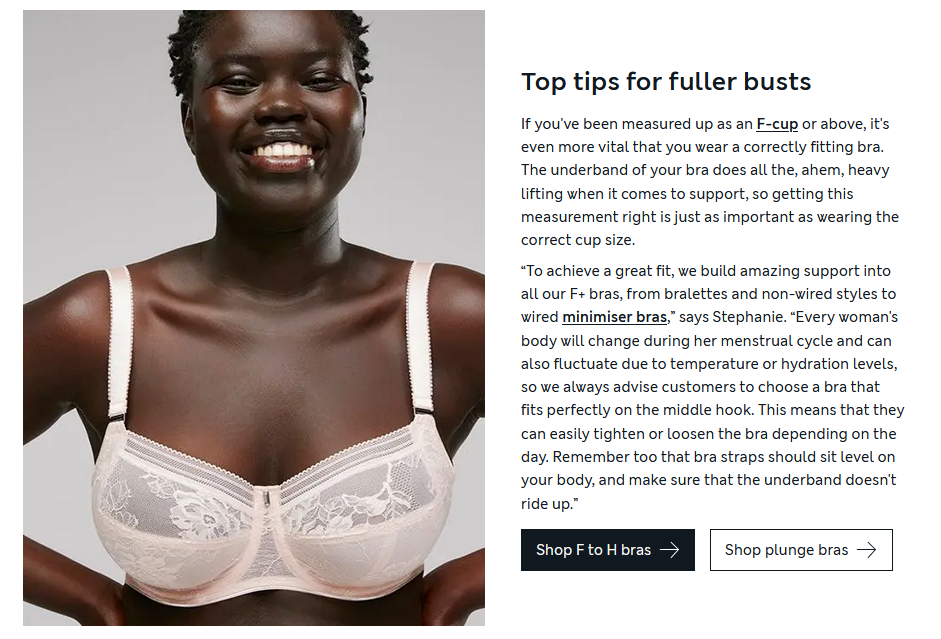
The size dropdown menu still includes sizes A-E, which should be omitted given M&S’ definitions of smaller and fuller busts.
- The dropdown is bloated – 140 sizes
- 55 sizes are irrelevant (A-E)
- 42JJ is completely out of sequence (listed after 44J). That size sold comparatively poorly because customers did not anticipate having to scroll down to look for it (appearing 15 positions lower than it should have).
Internal research and buyer sentiment surveys confirmed the importance size plays in customers deciding whether to add items to their cart or not, which is itself a strong indicator of purchase intent.
Corrective steps taken
Define extent of sizing errors: I documented dropdown menus from all product listing pages (PLP) in Men’s and Women’s clothing. Over 90% of PLPs were affected by the sizing issue.
Look for patterns to batch-solve errors: I took this step to having to manually change nearly 100 PLPs. I looked for patterns in case a fix-all script could be written. If templates were being used, they could also be corrected. Anything to reduce the total amount of manual handling.
The patterns I found were not statistically significant enough to warrant writing code for it. My conclusion was that some PLPs had copied and pasted sizes, creating three erroneous repeating patterns 3 or 4 times across PLPs. They appeared sporadically and would have to be solved manually:
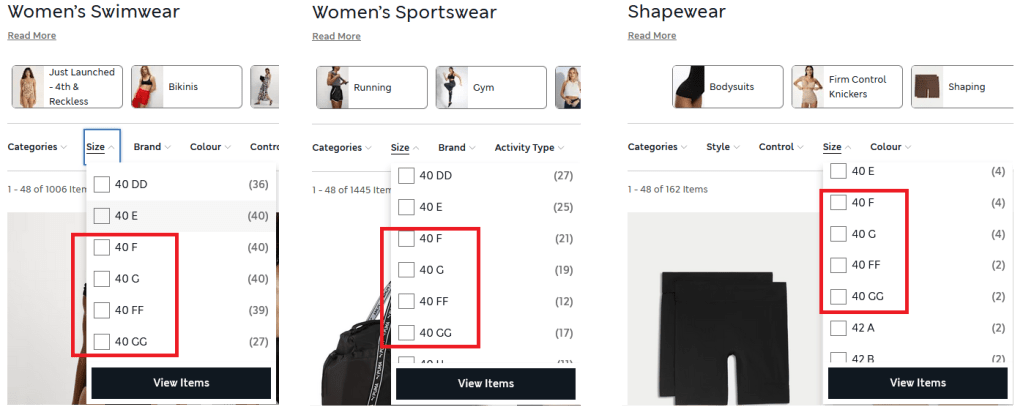
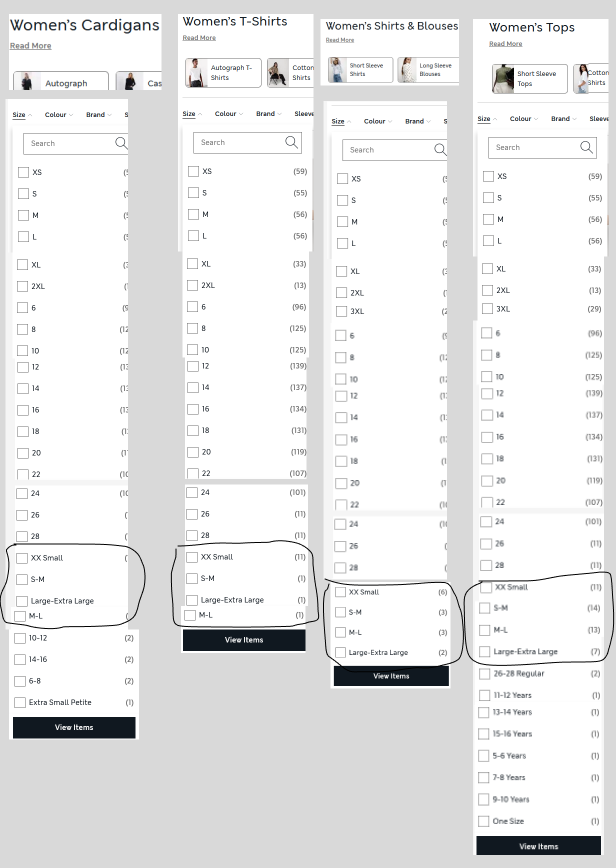
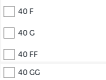
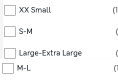
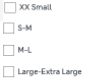
List steps to resolve in CMS: I created an Excel file with PLP names, a descriprion of size display issues, and a list of actions to take within the content management system (CMS) to reolve each one. Instructions from the full bust bra solution included:
- Navigate to [path for filter/size]
- Remove A-E sizes (55 entries)
- Rearrange order for 42JJ, taking it up 15 spots, after 42J
- Recount remaining filter options. Target: 85
Next steps after implementation: A 12-week deployment meant I could not delve too deeply into an individual filter but I did create guidance notes for areas that needed further research and exploration, like sub-filters for inseams. These were mostly written to reduce bloat in terms of too many sizes appearing in a dropdown. According to behavioural science principles, too much could end up discouraging making a choice at all. My work highlighted the need to look at the overall mix of filters that M&S uses, which are too inconsistent to give customers what they’re looking for. It presented a perfect opportunity for my successor to make a strong impression in their new role.
Documentation and handover: I initially wrote an all-encompassing JIRA ticket covering all PLPs but had to to expand it into multiple tickets for different product teams rather than sub-tasks. This made the overall ask manageable and less overwhelming than the initial ticket. It resulted in multiple meeting requests, which I condensed into a single meeting with relevant stakeholders, with follow-ups scheduled as needed.
When my deployment ended I handed over to my consulting team lead to help onboard the new M&S in-house content designer.
 Sherief Razzaque, uxwriter.work